Design World

  • Home
  • Technologies
    • 3D CAD
    • Electronics • electrical
    • Fastening & Joining
    • Factory automation
    • Linear Motion
    • Motion Control
    • Test & Measurement
    • Sensors
    • 流体动力
  • Learn
    • Ebooks / Tech Tips
    • Engineering Week
    • Future of Design Engineering
    • MC² Motion Control Classrooms
    • Podcasts
    • Videos
    • Webinars
  • LEAP AWARDS
  • 领导
    • 2022 Voting
    • 2021 Winners
  • Design Guide Library
  • Resources
    • 3D Cad Models
      • PARTsolutions
      • TraceParts
    • Digital Issues
      • Design World
      • EE World
    • Women in Engineering
  • Supplier Listings

What sensors are in a smart cane? Pt 2

ByRFrank|February 12, 2022

Share

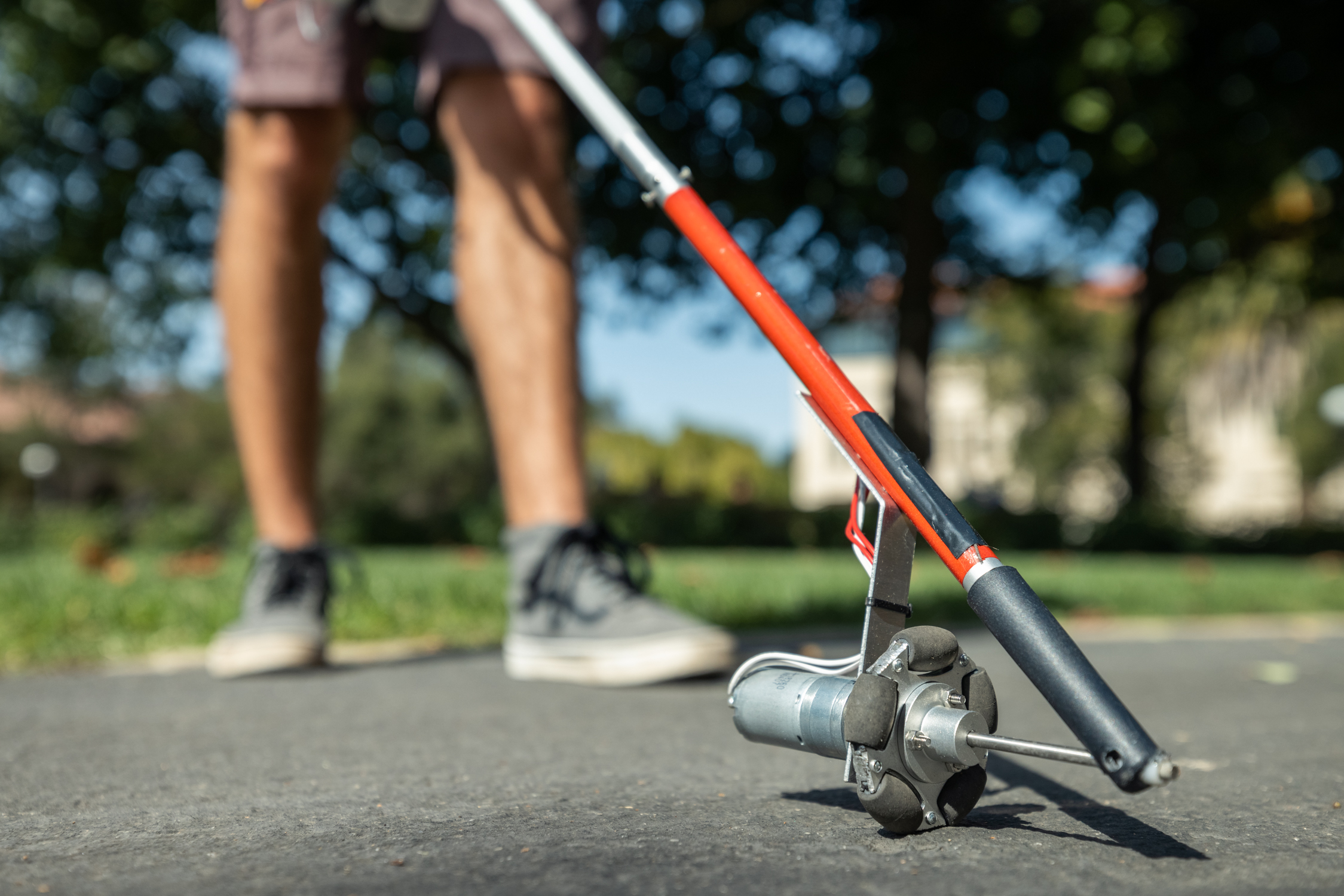
Inspired by self-driving vehicles and robotics, theAugmented Canedeveloped by Stanford University researchers uses a LiDAR sensor to measure distance to nearby obstacles and then provide directions so users can navigate around those areas. Additional sensors in the research prototype include GPS, accelerometers, magnetometers and gyroscopes to monitor the user’s position, speed, direction and more.
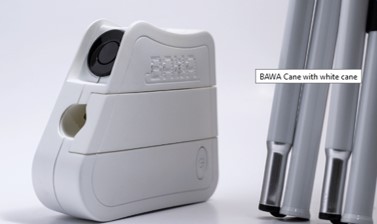
Developed by the Malaysian company BAWACANE (S) SDN BHD, theBAWA Caneclip on adapter for white canes or walking sticks turns the mechanical device into an electronically enhanced Internet of Things (IoT) connected detection system. Its dual sensors detect large obstacles such as steps, drops and overhead objects as well as small objects like a tennis ball. With its resolution of ±1 cm, detection range up to 4.5m and sensor angular coverage of 45°, the BAWA Cane can detect obstacles up to 1.2 meters (≈ 4 foot) above the waist and 1.2 meters (≈ 4 foot) in front of the user. Connected to the user’s smartphone, it can provide additional support for the user or information for concerned associates.
Unlike smart canes intended for the blind and vision impaired, the SmartCane system developed by UCLA researchers is intended as an assistive device to prevent or detect falls in older individuals. Providing biomechanical support, the normal walking cane is used as assistive devices by over 4 million individuals in the United States. Sensors on the SmartCane system include a 3-axis accelerometer, three single-axis gyroscopes, and two pressure sensors.

A final smart cane designed for the blind, WeWALK launched its smart cane with an upwards-facing ultrasonic sensor in 2019. Recently, thecompany partnered with Moovit, whose urban mobility app serve overs one billion users in more than 3,400 cities across 112 countries. With the smart cane existing voice assistance capabilities, Moovit’s Transit API allows users to:

  • Identify and navigate to bus stops more easily
  • Access real-time arrival information for a bus or train
  • Get Live Directions for accessible step-by-step guidance including multimodal routes
  • Receive audio and text Get Off Alerts
  • Obtain Service Alerts to avoid disruptions and proactively plan a journey

Filed Under:Sensor Tips
Tagged With:wewalk

相关文章Read More >

How is biomarker sensing expanding?
ToF sensor maps 3D surfaces
Stainless-steel pressure sensors handle 0 kPa to 100 MPa range
Sensor processing unit integrates DSP to run AI algorithms and MEMs sensors on same silicon

DESIGN GUIDE LIBRARY

“motion

不可或缺报名

Motion Control Classroom

Design World Digital Edition

cover

Browse the most current issueof Design World and back issues in an easy to use high quality format. Clip, share and download with the leading design engineering magazine today.

EDABoard the Forum for Electronics

Top global problem solving EE forum covering Microcontrollers, DSP, Networking, Analog and Digital Design, RF, Power Electronics, PCB Routing and much more

EDABoard: Forum for electronics

Sponsored Content

  • WAGO’s smartDESIGNER Online Provides Seamless Progression for Projects
  • Stop over-designing: How to save time and money with a light-duty ring
  • Five Reasons: The 2065 Connector is a Reliable Alternative to Manual Soldering
  • Disaster recovery in industrial automation starts with source control
  • HELUAKBEL – Your Source for IE Cable Solutions
  • Roller screws for any application

Design World Podcasts

February 14, 2022
3D printing: the “duct tape” for the supply chain?
看到更多>
Engineering Exchange

The Engineering Exchange is a global educational networking community for engineers.

Connect, share, and learn today »

Design World
  • Advertising
  • About us
  • Contact
  • Manage your Design World Subscription
  • Subscribe
  • Design World Digital Network
  • Engineering White Papers
  • LEAP AWARDS

Copyright © 2022 WTWH Media LLC. All Rights Reserved. The material on this site may not be reproduced, distributed, transmitted, cached or otherwise used, except with the prior written permission of WTWH Media
Privacy Policy|Advertising|About Us

Search Design World

  • Home
  • Technologies
    • 3D CAD
    • Electronics • electrical
    • Fastening & Joining
    • Factory automation
    • Linear Motion
    • Motion Control
    • Test & Measurement
    • Sensors
    • 流体动力
  • Learn
    • Ebooks / Tech Tips
    • Engineering Week
    • Future of Design Engineering
    • MC² Motion Control Classrooms
    • Podcasts
    • Videos
    • Webinars
  • LEAP AWARDS
  • 领导
    • 2022 Voting
    • 2021 Winners
  • Design Guide Library
  • Resources
    • 3D Cad Models
      • PARTsolutions
      • TraceParts
    • Digital Issues
      • Design World
      • EE World
    • Women in Engineering
  • Supplier Listings
We use cookies to personalize content and ads, to provide social media features and to analyze our traffic. We also share information about your use of our site with our social media, advertising and analytics partners who may combine it with other information that you’ve provided to them or that they’ve collected from your use of their services. You consent to our cookies if you continue to use this website. OkNoRead more