Design World

  • Home
  • Technologies
    • 3D CAD
    • Electronics • electrical
    • Fastening & Joining
    • Factory automation
    • Linear Motion
    • Motion Control
    • Test & Measurement
    • Sensors
    • 流体动力
  • Learn
    • Ebooks / Tech Tips
    • Engineering Week
    • Future of Design Engineering
    • MC² Motion Control Classrooms
    • Podcasts
    • Videos
    • Webinars
  • LEAP AWARDS
  • 领导
    • 2022 Voting
    • 2021 Winners
  • Design Guide Library
  • Resources
    • 3D Cad Models
      • PARTsolutions
      • TraceParts
    • Digital Issues
      • Design World
      • EE World
    • Women in Engineering
  • Supplier Listings

Warner XS-Series brake applications: Quiet and powerful braking in airline seats and more

ByLisa Eitel|June 9, 2017

Share

XS-Seriesspring-actuated electrically released brakes fromWarner Electric— part of the Altra Industrial Motion Corp. — are specifically designed to meet stringent compactness requirements in weight-sensitive applications. They boost reliable braking performance in a package weighing as little as 27 g. The XS brakes are also statically engaged holding so can stop moving loads in exceptional situations.
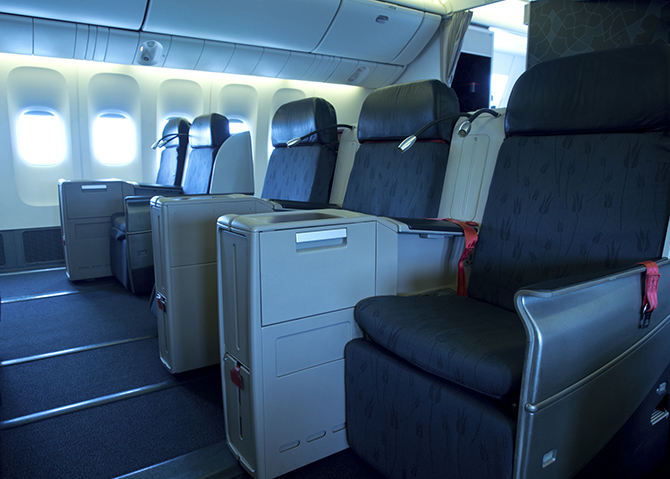
Warner Electric’s engineering team worked with an aerospace OEM during development of airplane seats to supply an XS brake that meets (or exceeds) all application requirements for compactness, quiet operation, and power. Source: iStock / servet yigit

The Warner Electric brakes work with actuators that are usually stationary. So such actuators move a load into the desired position and then hold it there while a product or machine performs its job. Typical applications for motion control include position-adjustment systems in medical equipment and seats.

Here, it’s critical that the actuators maintain fixed positions regardless of changes in the applied load or power-supply interruptions. That means mechanical brakes are a leading choice. Because these applications are limited by stringent weight, space, and cost constraints, the brakes must be highly specialized designs.

Warner Electric XS brake delivers on power density

The most powerful XS-Series brake delivers holding torque to 0.5 Nm from a package weighing only 100 g.

Where minimum size and weight are top priority, equipment manufacturers need brakes that precisely match application requirements — and ones that easily integrate into the rest of the design. So to satisfy these demands, XS brakes come in six sizes with diameters of 22 mm, 29 mm, and 33 mm. Each diameter includes variants optimized for shortest overall length and minimum weight — and a slightly longer version optimized for greater torque. The most powerful brake in the series delivers holding torque to 0.5 Nm in a 100-g package. The three brake diameters accommodate maximum shaft diameters of 3.5, 4.5, and 6 mm respectively.
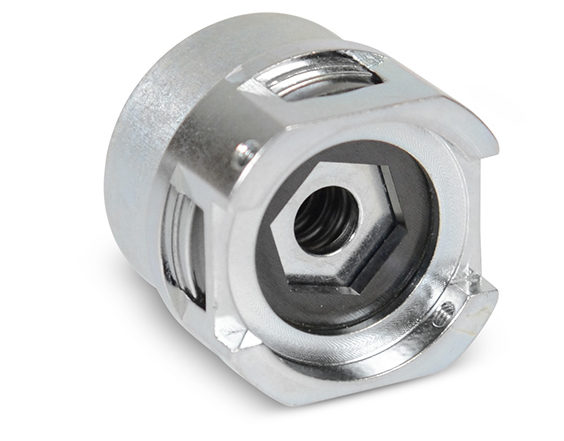
Warner Electric XS Series brakes are available in six sizes with overall diameters of 22 mm, 29 mm, and 33 mm. The most powerful XS-Series brake delivers holding torque to 0.5 Nm from a 100-g design.

To maximize mounting flexibility, XS brakes come with a custom-designed mounting plate tailored to end-user application needs. The actuating coil runs off a 24-Vdc power supply as standard with other voltage options available to suit other applications. Operation of the brakes takes only 3 W of power for the smallest units (and only 7 W for the largest). Warner’s investment in flexible lean-manufacturing operations means it manufactures custom brakes with short lead times in volumes to suit customer requirements.

Warner Electric XS Series for first and business-class airline seats

XS Series brakes are available in six sizes with overall diameters of 22 mm, 29 mm, and 33 mm. One of the first customer applications for the new XS Series brakes is on actuators in first and business-class seats for a major global aerospace OEM. There were extremely stringent space and weight requirements, and the customer needed exceptionally quiet operation. Seat specifications called for a brake having characteristics exactly matching that of the model XSB29 brake.

Working closely with the aerospace OEM during seat development and testing, Warner Electric’s engineering team supplied an XS brake that met or exceeded all application requirements. Plus the design is more cost-effective than competing permanent-magnet brake variations.
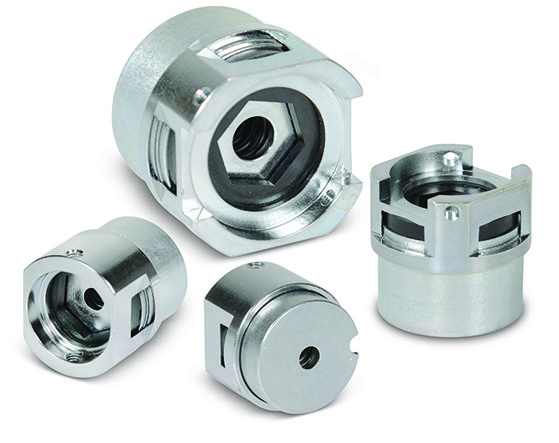
To maximize mounting flexibility, XS brakes come with a custom-designed mounting plate tailored to end-user application needs. The actuating coil runs off a 24-Vdc power supply as standard with other voltage options available to suit other applications.


Filed Under:Motion Control Tips
Tagged With:altraindustrialmotion,warnerelectric

About The Author

Lisa Eitel

Lisa Eitel has worked in the motion industry since 2001. Her areas of focus include motors, drives, motion control, power transmission, linear motion, and sensing and feedback technologies. She has a B.S. in Mechanical Engineering and is an inductee of Tau Beta Pi engineering honor society; a member of the Society of Women Engineers; and a judge for the FIRST Robotics Buckeye Regionals. Besides her motioncontroltips.com contributions, she also leads the production of the quarterly motion issues of Design World.

Tell Us What You Think!

Related ArticlesRead More >

Dual Axis Yaw-and-Pitch Stages feature full range of motion of each axis under a single fixed point in space
Controllers, drives keep pace with automation demands
What machine safety functions address speed, and when are they used?
Speed sensor optimizes main spindle on milling/turning machines

DESIGN GUIDE LIBRARY

“motion

Enews Sign Up

Motion Control Classroom

Design World Digital Edition

cover

Browse the most current issueof Design World and back issues in an easy to use high quality format. Clip, share and download with the leading design engineering magazine today.

EDABoard the Forum for Electronics

Top global problem solving EE forum covering Microcontrollers, DSP, Networking, Analog and Digital Design, RF, Power Electronics, PCB Routing and much more

EDABoard: Forum for electronics

Sponsored Content

  • 10 Reasons to Specify Valve Manifolds
  • Case study: How a 3D-printed tool saved thousands of hours and dollars
  • WAGO’s smartDESIGNER Online Provides Seamless Progression for Projects
  • Stop over-designing: How to save time and money with a light-duty ring
  • Five Reasons: The 2065 Connector is a Reliable Alternative to Manual Soldering
  • 灾难恢复工业盟tomation starts with source control

Design World Podcasts

March 27, 2022
3D printing proves its value as manufacturing evolves
See More >
Engineering Exchange

The Engineering Exchange is a global educational networking community for engineers.

Connect, share, and learn today »

Design World
  • Advertising
  • About us
  • Contact
  • Manage your Design World Subscription
  • Subscribe
  • Design World Digital Network
  • Engineering White Papers
  • LEAP AWARDS

Copyright © 2022 WTWH Media LLC. All Rights Reserved. The material on this site may not be reproduced, distributed, transmitted, cached or otherwise used, except with the prior written permission of WTWH Media
Privacy Policy|Advertising|About Us

Search Design World

  • Home
  • Technologies
    • 3D CAD
    • Electronics • electrical
    • Fastening & Joining
    • Factory automation
    • Linear Motion
    • Motion Control
    • Test & Measurement
    • Sensors
    • 流体动力
  • Learn
    • Ebooks / Tech Tips
    • Engineering Week
    • Future of Design Engineering
    • MC² Motion Control Classrooms
    • Podcasts
    • Videos
    • Webinars
  • LEAP AWARDS
  • 领导
    • 2022 Voting
    • 2021 Winners
  • Design Guide Library
  • Resources
    • 3D Cad Models
      • PARTsolutions
      • TraceParts
    • Digital Issues
      • Design World
      • EE World
    • Women in Engineering
  • Supplier Listings
We use cookies to personalize content and ads, to provide social media features and to analyze our traffic. We also share information about your use of our site with our social media, advertising and analytics partners who may combine it with other information that you’ve provided to them or that they’ve collected from your use of their services. You consent to our cookies if you continue to use this website. OkNoRead more