Design World

  • Home
  • Technologies
    • 3D CAD
    • Electronics • electrical
    • Fastening & Joining
    • Factory automation
    • Linear Motion
    • Motion Control
    • Test & Measurement
    • Sensors
    • 流体动力
  • Learn
    • Ebooks / Tech Tips
    • Engineering Week
    • Future of Design Engineering
    • MC² Motion Control Classrooms
    • Podcasts
    • Videos
    • Webinars
  • LEAP AWARDS
  • 领导
    • 2022 Voting
    • 2021 Winners
  • Design Guide Library
  • Resources
    • 3D Cad Models
      • PARTsolutions
      • TraceParts
    • Digital Issues
      • Design World
      • EE World
    • Women in Engineering
  • Supplier Listings

Photos of the Day: World’s First Jet-Powered, 3D Printed UAV Tops 150 MPH

ByStratasys|November 12, 2015

Share

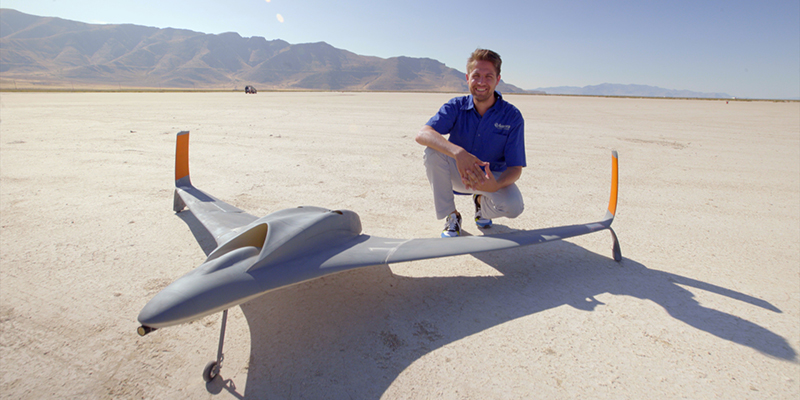
Dan Campbell (pictured) from Aurora Flight Sciences with the new UAV. Image credit: Stratasys

Stratasys has announced that it has teamed with Aurora Flight Sciences to deliver, what is believed to be, the largest, fastest, and most complex 3D printed unmanned aerial vehicle (UAV) ever produced. Unveiled for the first time at this week’s Dubai Airshow (Stand 206), the high-speed aircraft is built using lightweight Stratasys materials to achieve speeds in excess of 150mph.

To realize the joint goal to design and develop an advanced 3D printed demonstration aircraft, the final UAV – which has a 3m (9ft.) wingspan and weighs only 15kg (33lb.) – leveraged 3D printing for 80 percent of its design and manufacture and is built on the expertise of Aurora Flight Sciences’ aerospace and Stratasys’ additive manufacturing.
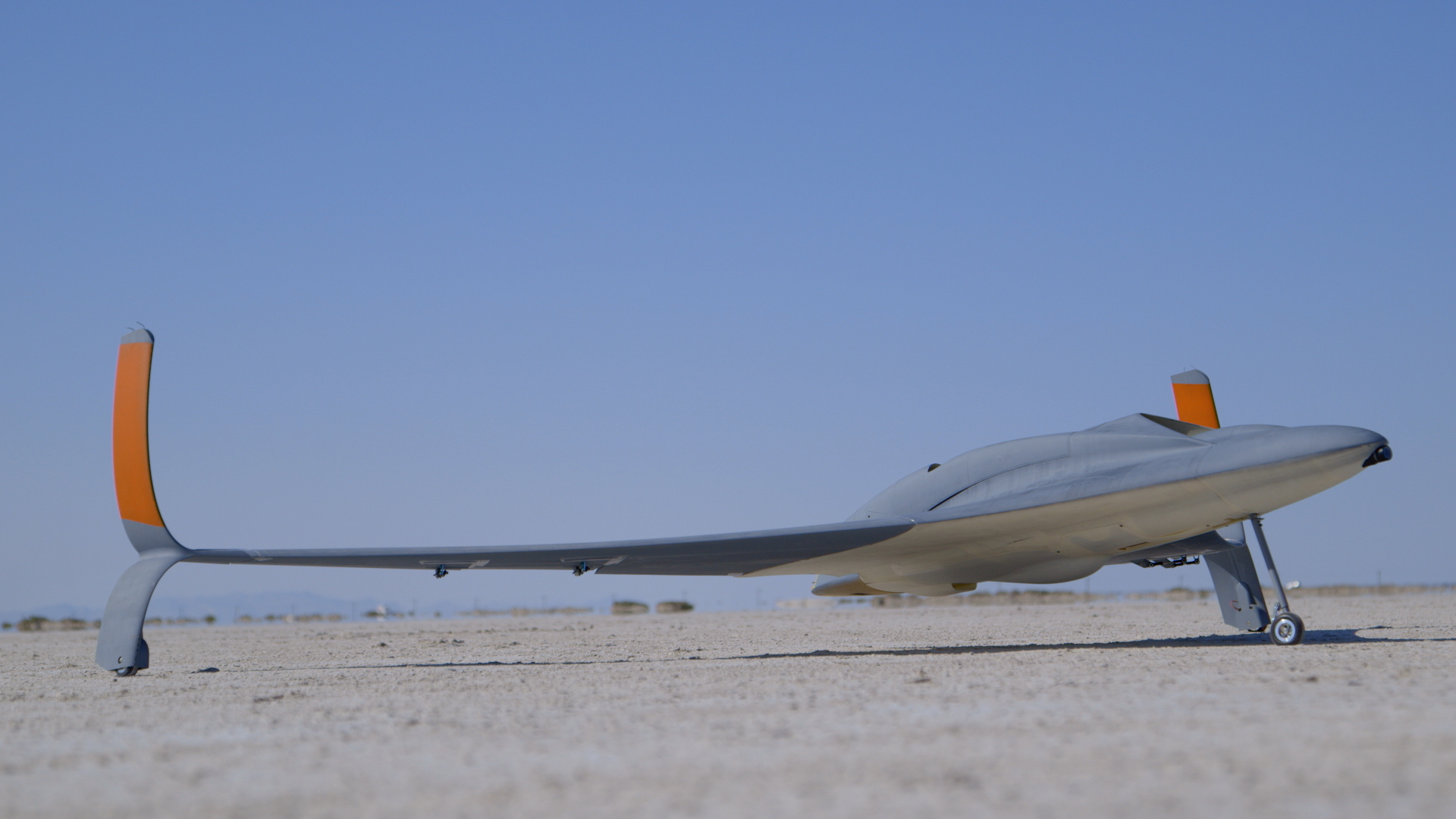
Image credit: Stratasys

According to Dan Campbell, Aerospace Research Engineer at Aurora Flight Sciences, the project achieved various targets. “A primary goal for us was to show the aerospace industry just how quickly you can go from designing to building to flying a 3D printed jet-powered aircraft. To the best of our knowledge, this is the largest, fastest, and most complex 3D printed UAV ever produced.”

“This is a perfect demonstration of the unique capabilities that additive manufacturing can bring to aerospace,” says Scott Sevcik, Aerospace & Defense Senior Business Development Manager, Vertical Solutions at Stratasys. “This meant using different 3D printing materials and technologies together on one aircraft to maximize the benefits of additive manufacturing and 3D print both lightweight and capable structural components.”
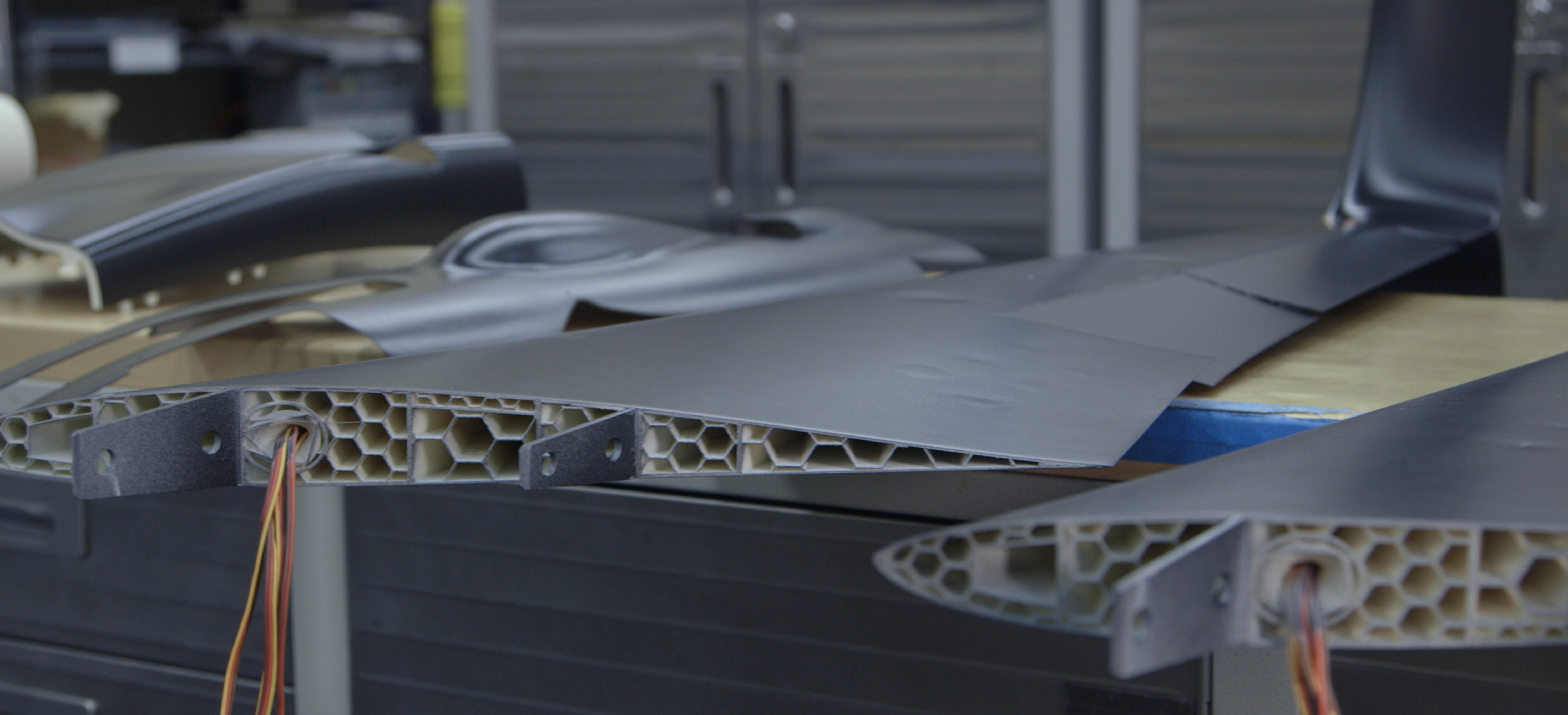
Image credit: Stratasys

“Stratasys 3D printing technology easily supports rapid design iterations that led to a dramatically shortened timeline from the initial concept to the first successful flight,” adds Campbell. “Overall, the technology saw us cut the design and build time of the aircraft by 50 percent.”

According to Sevcik, the project exemplifies the power of Stratasys’ flagship Fused Deposition Modeling (FDM) 3D printing technology.

“Aurora’s UAV is a clear evidence of FDM’s ability to build a completely enclosed, hollow structure which, unlike other manufacturing methods, allows large – yet less dense – objects to be produced,” he explains.

“In addition to leveraging FDM materials for all large and structural elements, we utilized the diverse production capability of Stratasys Direct Manufacturing to produce components better suited to other technologies. We elected to laser sinter the nylon fuel tank, and our thrust vectoring exhaust nozzle was 3D printed in metal to withstand the extreme heat at the engine nozzle,” Sevcik adds.

“Because Stratasys is able to produce parts that meet the flame, smoke, and toxicity requirements set by the FAA, ULTEM has become the 3D printing material of choice for many of our aerospace customers for final production applications,” he continues.

For Sevcik, this particular collaborative project with Aurora achieves one of the foremost overall goals among aerospace manufacturers, as well as those in other industries, which is the need to constantly reduce weight.

“Whether by air, water or on land, lightweight vehicles use less fuel. This enables companies to lower operational costs, as well as reduce environmental impact. In addition, using only the exact material needed for production is expected to reduce acquisition cost by eliminating waste and reducing scrap and recycling costs,” he concludes.


Filed Under:Aerospace + defense


Related ArticlesRead More >

Nye Lubricants’ Pennzane Oil to launch on James Webb Space Telescope
Vibration tests boost NASA’s electric aircraft project
AstroAccess completes ZERO-G Parabolic flight with crew of 12 disability ambassadors
abaco
Ruggidized modular computers come in small form factor

DESIGN GUIDE LIBRARY

“motion

Enews Sign Up

Motion Control Classroom

Design World Digital Edition

cover

Browse the most current issueof Design World and back issues in an easy to use high quality format. Clip, share and download with the leading design engineering magazine today.

EDABoard the Forum for Electronics

Top global problem solving EE forum covering Microcontrollers, DSP, Networking, Analog and Digital Design, RF, Power Electronics, PCB Routing and much more

EDABoard: Forum for electronics

Sponsored Content

  • 10 Reasons to Specify Valve Manifolds
  • Case study: How a 3D-printed tool saved thousands of hours and dollars
  • WAGO’s smartDESIGNER Online Provides Seamless Progression for Projects
  • Stop over-designing: How to save time and money with a light-duty ring
  • Five Reasons: The 2065 Connector is a Reliable Alternative to Manual Soldering
  • 灾难恢复工业盟tomation starts with source control

Design World Podcasts

February 27, 2022
What’s next for additive software
See More >
Engineering Exchange

The Engineering Exchange is a global educational networking community for engineers.

Connect, share, and learn today »

Design World
  • Advertising
  • About us
  • Contact
  • Manage your Design World Subscription
  • Subscribe
  • Design World Digital Network
  • Engineering White Papers
  • LEAP AWARDS

Copyright © 2022 WTWH Media LLC. All Rights Reserved. The material on this site may not be reproduced, distributed, transmitted, cached or otherwise used, except with the prior written permission of WTWH Media
Privacy Policy|Advertising|About Us

Search Design World

  • Home
  • Technologies
    • 3D CAD
    • Electronics • electrical
    • Fastening & Joining
    • Factory automation
    • Linear Motion
    • Motion Control
    • Test & Measurement
    • Sensors
    • 流体动力
  • Learn
    • Ebooks / Tech Tips
    • Engineering Week
    • Future of Design Engineering
    • MC² Motion Control Classrooms
    • Podcasts
    • Videos
    • Webinars
  • LEAP AWARDS
  • 领导
    • 2022 Voting
    • 2021 Winners
  • Design Guide Library
  • Resources
    • 3D Cad Models
      • PARTsolutions
      • TraceParts
    • Digital Issues
      • Design World
      • EE World
    • Women in Engineering
  • Supplier Listings
We use cookies to personalize content and ads, to provide social media features and to analyze our traffic. We also share information about your use of our site with our social media, advertising and analytics partners who may combine it with other information that you’ve provided to them or that they’ve collected from your use of their services. You consent to our cookies if you continue to use this website. OkNoRead more