


Source: NeuroBlade
NeuroBlade Ltd., which is working on a processor for artificial intelligence applications, has completed Round A funding of $23 million. In addition to the $4.5 million it previously raised, the Israeli startup plans to use the new funding to scale its workforce and ramp up its marketing efforts to bring the first generation of its AI chip to market.
The company raised its initial capital while in stealth mode from StageOne Ventures and Grove Ventures, headed by Dov Moran, the inventor of the USB flash drive and co-founder of M-Systems. Additional initial capital was received by several private investors, including Rami Lipman.
Marius Nacht, co-founder of Check Point Software Technologies, ledNeuroBlade‘s Series A round with the participation of new investor Intel Capital and existing investors StageOne Ventures and Grove Ventures.
NeuroBlade founders have startup experience
NeuroBlade was founded in 2017 by Elad Sity, now CEO, and Eliad Hillel, now chief technology officer and vice president of product strategy. Sity and Hillel are both graduates of the technological unit of Israel’s Intelligence Corps and formerly key employees of SolarEdge, which grew from a small startup to a successful public company. Both of them became immersed in high tech from a young age, long before their military service.
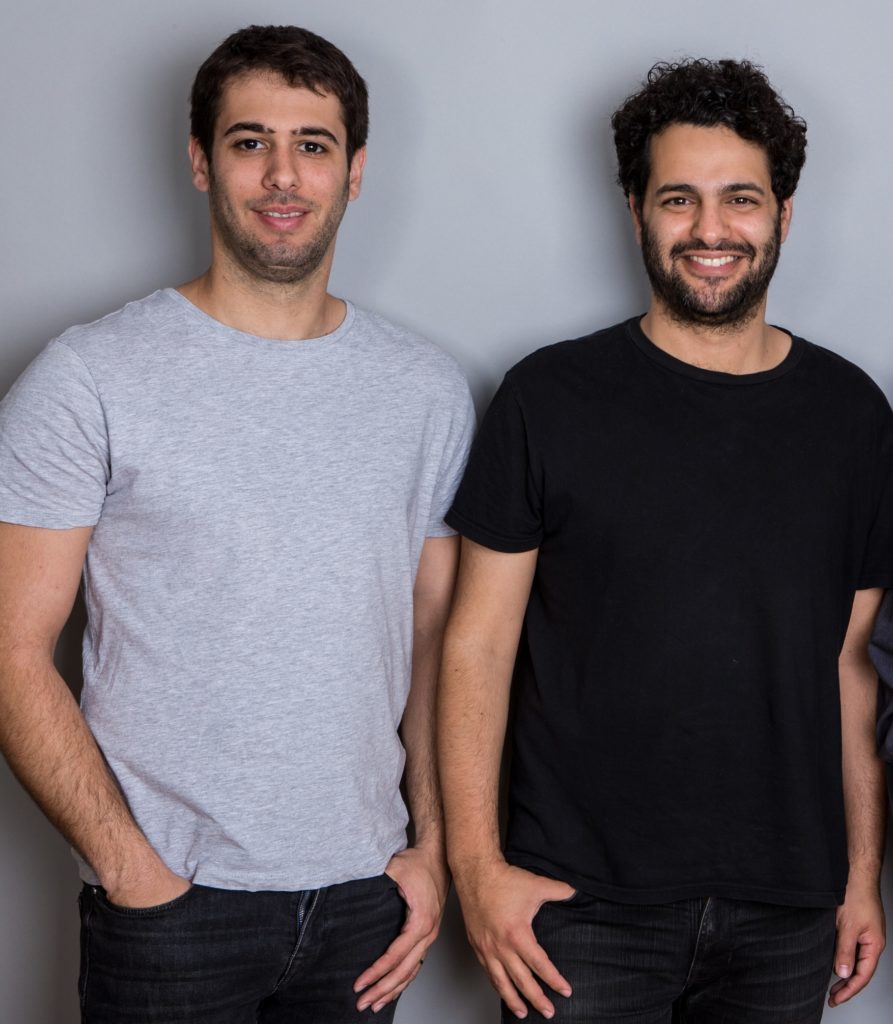
NeuroBlade CTO and VP of product strategy Eliad Hillel (left) and CEO Elad Sity (right). Credit: Keren Gafni
Sity joined SolarEdge shortly after it was founded. In his last position there, he served as vice president of software and systems. He met Hillel when the latter joined the hardware department. Hillel later led one of the central software and algorithm teams in Sity’s department.
“Leaving SolarEdge, a company I’ve been part of for years, is no simple thing — leaving the position, the friends, and the security of working for a big company. We decided to leave because we knew we were starting something new and different that could provide significant value to customers,” said Hillel. “Fortunately, the experience we accumulated in the past was very relevant in helping us face our new challenges — making something out of nothing, by taking different technologies, which are not necessarily related, adding our secret sauce and talent and integrating them into something bigger.”
AI chip market growth
The AI processor market segment is currently led byNVIDIAandIntelbut isbecoming more crowdedas more startups develop processors for different market segments, as well as large corporations that are developing processors for their own needs. AI chips are used today in a wide range of applications, including image and speech recognition, video analysis, and autonomous driving.
The deployment and use of AI is still limited by factors such as size, price, throughput, or performance of these chips. The NeuroBlade chip is designed with different technology and architecture that allows it to solve a fundamental issue of running AI applications. It maintains a strong performance level despite being smaller and less expensive to make.
According to NeuroBlade, the chip is meant to run several neural networks and multiple complex algorithms at the same time. Its main advantage, according to the company, is that it is able to also solve tomorrow’s problems, not just the relatively “simple” problems computers grapple with today.
“We started out slightly over two years ago with an ambitious idea how to solve AI’s computational challenges,” said Sity. “Our core team has grown stronger over the past two years, creating a solid foundation for the upcoming growth.”
“NeuroBlade将允许runni开发的芯片ng AI algorithms on par with the performance of market-leading chips but at a smaller size or with significantly better performance at similar throughput and size,” explained Tal Slobodkin, partner at StageOne Venture Capital. “NeuroBlade’s technology targets servers and is also relevant to end devices, such as security cameras, laptops, cars, multimedia, and more.”
“From the first moment, it was clear this team has a very different, yet feasible concept for an AI chip,” noted Dov Moran, Managing Partner at Grove Ventures.
Filed Under:AI • machine learning,The Robot Report


Tell Us What You Think!