Design World

  • Home
  • Technologies
    • 3D CAD
    • Electronics • electrical
    • Fastening & Joining
    • Factory automation
    • Linear Motion
    • Motion Control
    • Test & Measurement
    • Sensors
    • 流体动力
  • Learn
    • Ebooks / Tech Tips
    • Engineering Week
    • Future of Design Engineering
    • MC² Motion Control Classrooms
    • Podcasts
    • Videos
    • Webinars
  • LEAP AWARDS
  • 领导
    • 2022 Voting
    • 2021 Winners
  • Design Guide Library
  • Resources
    • 3D Cad Models
      • PARTsolutions
      • TraceParts
    • Digital Issues
      • Design World
      • EE World
    • Women in Engineering
  • Supplier Listings

FAQ: How do engineers typically integrate stepper drives?

ByZak Khan|June 30, 2015

Share

Stepper Drive

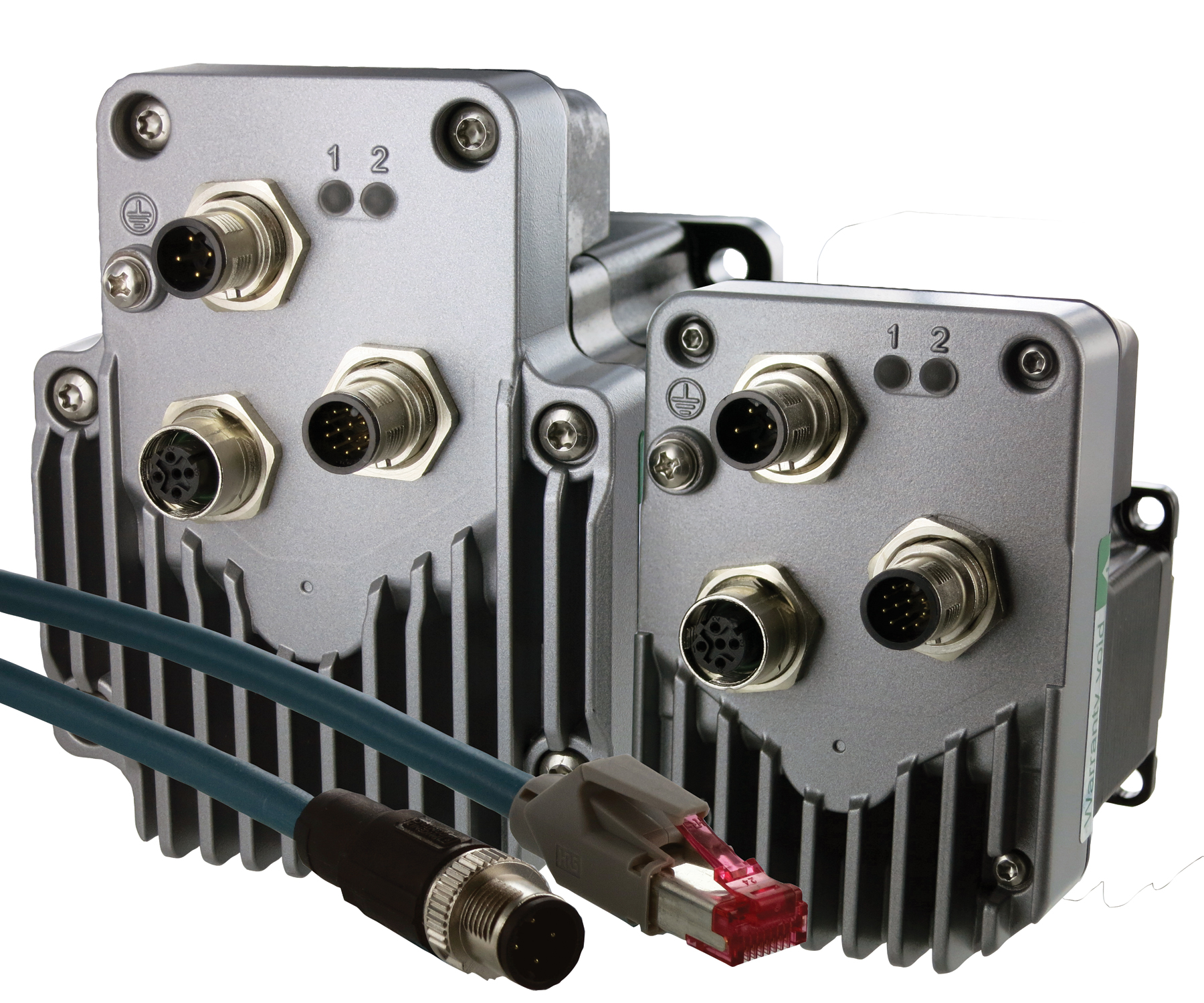
Engineers can implement stepper motor drives in numerous ways. Companies often produce pre-packaged drives that can run with a variety of microprocessors and motors. This means that that drive is prefabricated and the engineer has many decisions on where and how to use it. Beyond this, some companies even offer complete off-the-shelf boards. These combine the drive and microprocessor … so the engineer programs the unit with instructions on the angles to which the stepper motor must step. Designing a custom drive is also possible. In terms of price paid for upfront costs, this is often the cheapest option. Tip: consider more than just cost when implementing drives. Building drives takes much time and work and relies on in-house expertise. For complex systems, it is often better to buy than build.

During operation, drives receive step and direction commands from an indexer or control system. In most cases, the indexer must also provide and manage acceleration, steps per second, distance and deceleration controls. The indexer collects high-level commands from the host computer and generates the needed step and direction pulses. Some versions can also run as standalone controllers after downloading and storing data to non-volatile memory. Here, the drive translates control data into electrical signals that run the step motor.

Beyond this, stepper motors also require power supplies, logic sequencers, switching components and a clock pulse source. Many drives incorporate these already, but some more basic drives contain only the final power stage without any controller electronics to generate step sequences. These need power supplies to regulate output.

To determine what kind of drive to use, engineers must analyze the load, including determining friction and inertia loads, torque required and power consumption, and damping required. Next, engineers must determine what kind of motor-drive combination works best. Tip: here, use performance curves provided by manufacturers and compare them to the intended design requirements.

For more information, visit:

Omega Engineering’s technical page on stepper motors

AMETEK’s Haydon Kerk stepper-drive landing page

University of Texas at Austin PDF: Stepper motor and driver selection

Design World article: Building versus buying a stepper motor

Motion Control Tips


Filed Under:Motion Control Tips,Drives (stepper) + amplifiers
Tagged With:ametek,haydonkerk

Related ArticlesRead More >

Encoders from SIKO support Industrial Ethernet
Draw-wire encoders from SIKO measure position, speed and inclination
Incremental encoders configurable via NFC (near-field communication)
Low-cost motion control offered with CLICK PLUS PLCs from AutomationDirect

DESIGN GUIDE LIBRARY

“motion

Enews Sign Up

Motion Control Classroom

Design World Digital Edition

cover

Browse the most current issueof Design World and back issues in an easy to use high quality format. Clip, share and download with the leading design engineering magazine today.

EDABoard the Forum for Electronics

Top global problem solving EE forum covering Microcontrollers, DSP, Networking, Analog and Digital Design, RF, Power Electronics, PCB Routing and much more

EDABoard: Forum for electronics

Sponsored Content

  • Global supply needs drive increased manufacturing footprint development
  • How to Increase Rotational Capacity for a Retaining Ring
  • Cordis high resolution electronic proportional pressure controls
  • WAGO’s custom designed interface wiring system making industrial applications easier
  • 10 Reasons to Specify Valve Manifolds
  • Case study: How a 3D-printed tool saved thousands of hours and dollars

Design World Podcasts

May 17, 2022
Another view on additive and the aerospace industry
See More >
Engineering Exchange

The Engineering Exchange is a global educational networking community for engineers.

Connect, share, and learn today »

Design World
  • Advertising
  • About us
  • Contact
  • Manage your Design World Subscription
  • Subscribe
  • Design World Digital Network
  • Engineering White Papers
  • LEAP AWARDS

Copyright © 2022 WTWH Media LLC. All Rights Reserved. The material on this site may not be reproduced, distributed, transmitted, cached or otherwise used, except with the prior written permission of WTWH Media
Privacy Policy|Advertising|About Us

Search Design World

  • Home
  • Technologies
    • 3D CAD
    • Electronics • electrical
    • Fastening & Joining
    • Factory automation
    • Linear Motion
    • Motion Control
    • Test & Measurement
    • Sensors
    • 流体动力
  • Learn
    • Ebooks / Tech Tips
    • Engineering Week
    • Future of Design Engineering
    • MC² Motion Control Classrooms
    • Podcasts
    • Videos
    • Webinars
  • LEAP AWARDS
  • 领导
    • 2022 Voting
    • 2021 Winners
  • Design Guide Library
  • Resources
    • 3D Cad Models
      • PARTsolutions
      • TraceParts
    • Digital Issues
      • Design World
      • EE World
    • Women in Engineering
  • Supplier Listings
We use cookies to personalize content and ads, to provide social media features and to analyze our traffic. We also share information about your use of our site with our social media, advertising and analytics partners who may combine it with other information that you’ve provided to them or that they’ve collected from your use of their services. You consent to our cookies if you continue to use this website. OkNoRead more