

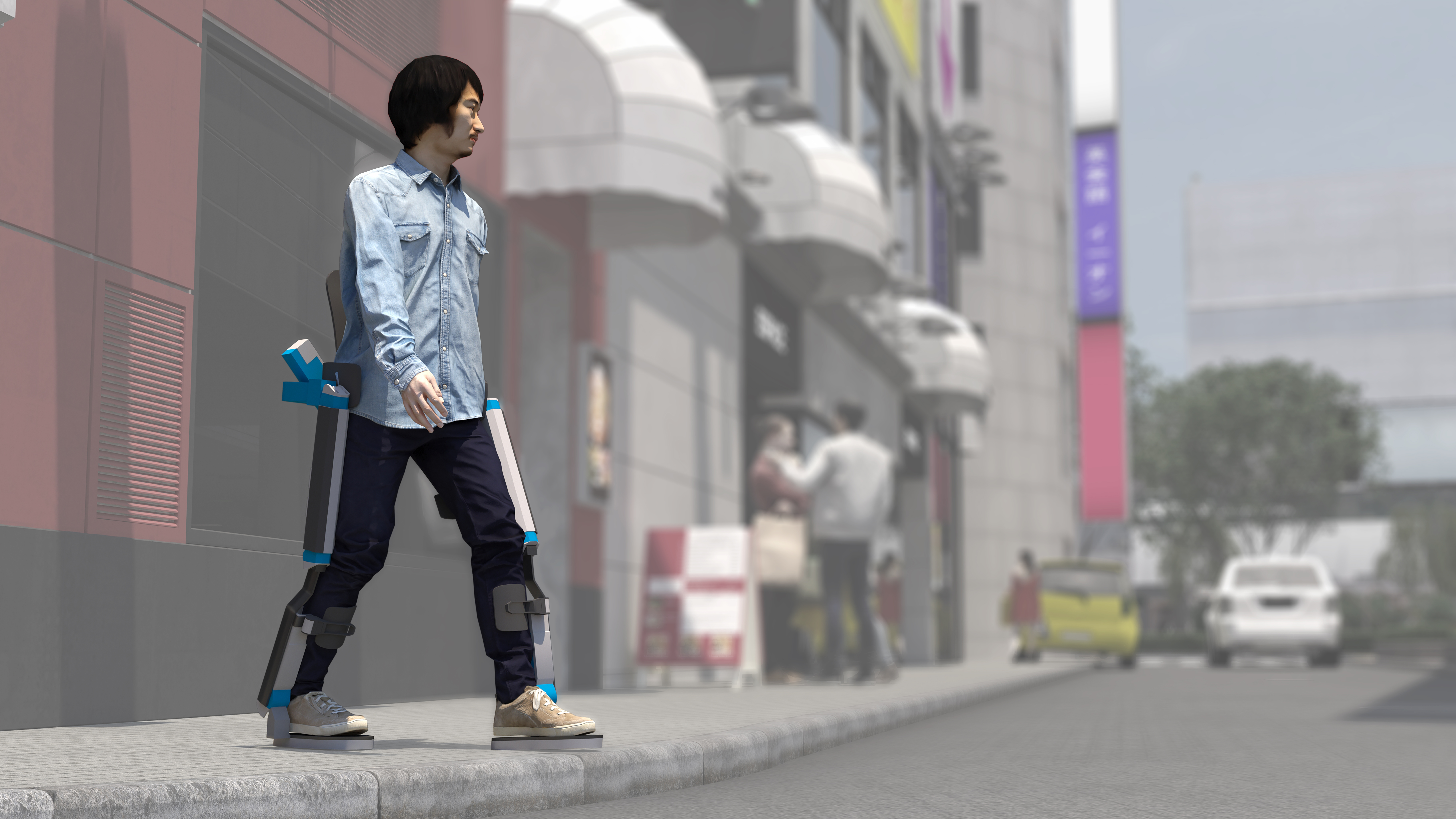
IHMC and MYOLIN’s Quix is among the finalists in the Mobility Unlimited Challenge. Images designed by Simon Mckeown with Craig McMullen.
Ride-hailing services, electric vehicles, delivery robots, and self-driving cars and trucks are changing transportation at the fastest pace in decades. Toyota Motor Corp. has been a leader among automakers in expanding its focus to personal mobility. The Toyota Mobility Unlimited Challenge is a three-year, $4 million competition for improving mobility for people with disabilities.
At CES last month, theToyota Mobility Foundationand U.K. charityNesta Challenge Prize Centreannounced five finalists. They provide examples of how developers can work with end users, gain funding, and take products from concept to commercialization.
Mobility Unlimited Challenge narrows the field
TheMobility Unlimited Challengebegan in 2017 with the goal of helping people with lower-limb paralysis. A 2018ComRes surveyof 575 wheelchair users in the U.K., U.S., India, Brazil, and Japan found that 89 percent of them experienced pain and discomfort, and the same percentage reported negative consequences when working or job hunting.
Eighty organizations initially applied, and theexpert judgesnarrowed that number to 25. Last April, the Toyota Mobility Foundation gave 10 Discovery Awards of $50,000 each to enable small, early-stage innovators to participate.
The five Mobility Unlimited Challenge finalists have received $500,000 each. They include the following:
- Evolution Devices(U.S.), which is developing EvoWalk, a wearable sleeve that uses sensors and artificial intelligence to predict users’ walking motions and electrically stimulates their muscles
- The Florida Institute for Human and Machine Cognition (IHMC) andMYOLYN(U.S.), which are working on Quix, a mobile, powered exoskeleton offering fast, stable, and agile upright mobility
- Italdesign Giugiaro SpA(Italy), whose Moby is an integrated, app-based network of wheel-on powered devices to give manual wheelchair users the benefits of powered chairs
- Phoenix Instinct(U.K.), which is building an ultra-lightweight, self-balancing, smart wheelchair that eliminates painful vibrations
- Team QOLO (Quality of Life with Locomotion;University of Tsukuba, Japan), whose QOLO is a mobile exoskeleton on wheels and is designed to allow users to easily sit or stand
The Toyota Mobility Unlimited Challenge will award a $1 million grant to the winner in Tokyo in September 2020.
The Robot Reportspoke with members of the two U.S.-based teams about their projects. Peter Neuhaus is a senior research scientist at IHMC in Pensacola, Fla., and Pierluigi Mantovani is co-founder and CEO of Evolution Devices in Berkeley, Calif.
Q: How did you become involved with the Mobility Unlimited Challenge?
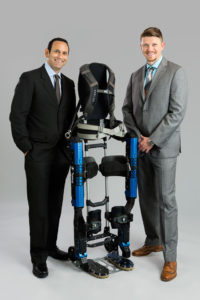
IHMC’s Peter Neuhaus (left) and MYOLYN’s Matthew Bellman.
Neuhaus:My partner Matthew Bellman was an intern at IHMC. He’s now chief technology officer at MYOLYN, a startup in Gainesville working on electrical stimulation bicycles for patients with paralysis.
Matt saw our first prototypes and is passionate aboutexoskeletontechnology. He wanted to collaborate and pointed [the competition] out to me. MYOLYN brings commercial expertise to our research foundation. Our goal is to have Quix be commercialized.
We submitted our proposal, followed up with questions, and were on the short list of team members to present in person to a panel in London. It was the most rigorous selection process I’ve been involved with.
Mantovani:My co-founders and I built the first prototype of EvoWalk about a year and a half ago for my dad, who has multiple sclerosis [MS]. He had issues with walking, and there were no affordable devices available for electrical stimulation.
We then applied for and won a Discovery Award for the Toyota Mobility Unlimited Challenge, and that $50,000 was extremely helpful for getting us started. We built a lab, started tracking motion, and built something that was less hacky than the box my dad was willing to wear.
Q: Tell us about your entries into the Mobility Unlimited Challenge.
Neuhaus:Our device is designed to help people with lower-limb paralysis get up and walk. Balance was performed entirely by the user in previous models.
For Quix, we’re adding actuators and smarts so the device can perform some automatic balancing, assisting the user and reducing reliance on crutches.
The balancing comes from our laboratory’s work on legged and humanoid robots over the past 16 years. The challenge is a fantastic opportunity.
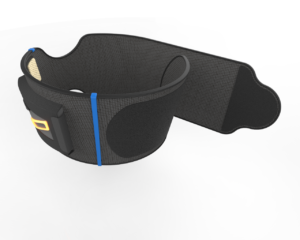
EvoWalk耐磨,必须考虑使用rs’ capabilities.
Mantovani:There are a lot of devices that are out there now to track walking motion, but we need to understand it better to give people better outcomes with EvoWalk.
End users really need something that’s easy to put on independently. For example, people with MS don’t really have good sensation in their fingers. These are small things you might not think about, which is why we need testing.
For most consumers, you don’t need to tell them how to put on a glove, but for this community, we need to think about how to accomplish this as we test out the design.
Q: How does your entry advance the state of technology?
Neuhaus:For the past 10 years, all exoskeletons have been relatively similar, including those fromEkso Bionics, Indego,ReWalk, and ourselves. In 2010, our first exoskeleton had identical motors at the hips and knees, and it performed similarly to our current device. Our new device addresses some of those limitations.
There isn’t a single advancement; it’s a matter of spending the time and effort to advance the field. It’s the same as withBoston Dynamicsand thelatest version of humanoid robot Atlas. It worked hard to reduce the size of the power plant, routed lines in a printed titanium frame, and decreased weight and increased performance incrementally.
They’re building on a huge foundation of $200 million. The exoskeleton community needs the same level of investment and commitment to progress.
Mantovani:We’re working really closely with end users. Evolution Devices has the advantage of not being a big company, so we can rapidly iterate the EvoWalk.
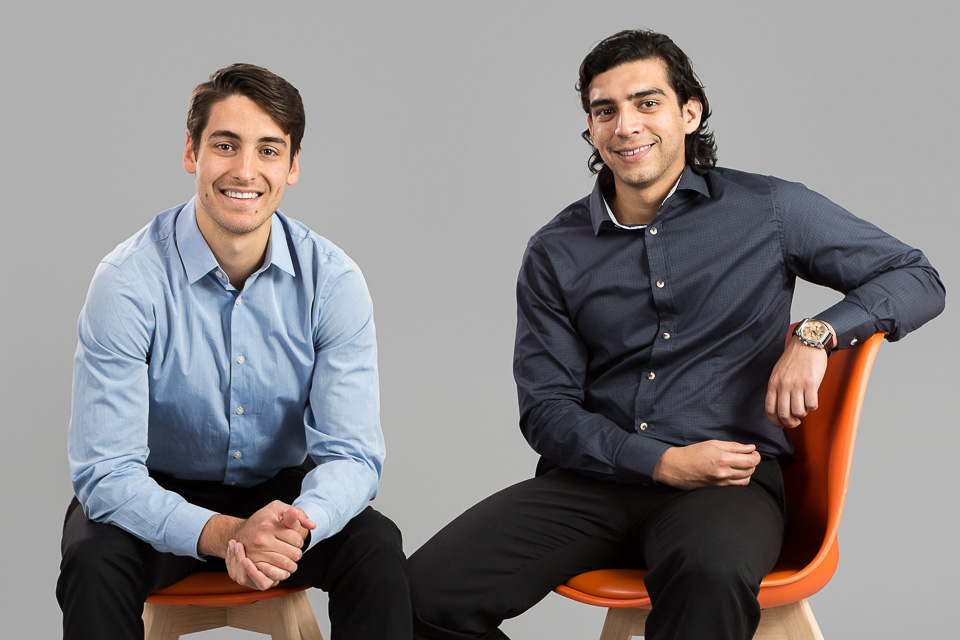
CEO Pierluigi Mantovani (left) and CTO Juan M. Rodriguez of Evolution Devices
We’ve worked with some local clinics in the Bay Area, and that gave us confidence to push forward. We want to expand that reach to a larger base of MS, PLS [primary lateral sclerosis], and stroke patients.
One of the biggest innovations we have is AI software on the device. It helps us create a personalized stimulation experience for each user. We’re constantly adjusting it on each person, and then we can generalize.
Q: What will you do with the $500,000 given to finalists?
Neuhaus:Mainly a combination between labor and part costs for Quix.
Mantovani:We still have some R&D to do, and we need to do more extensive testing with users to make EvoWalk product-ready. Our hardware and software teams are well-versed.
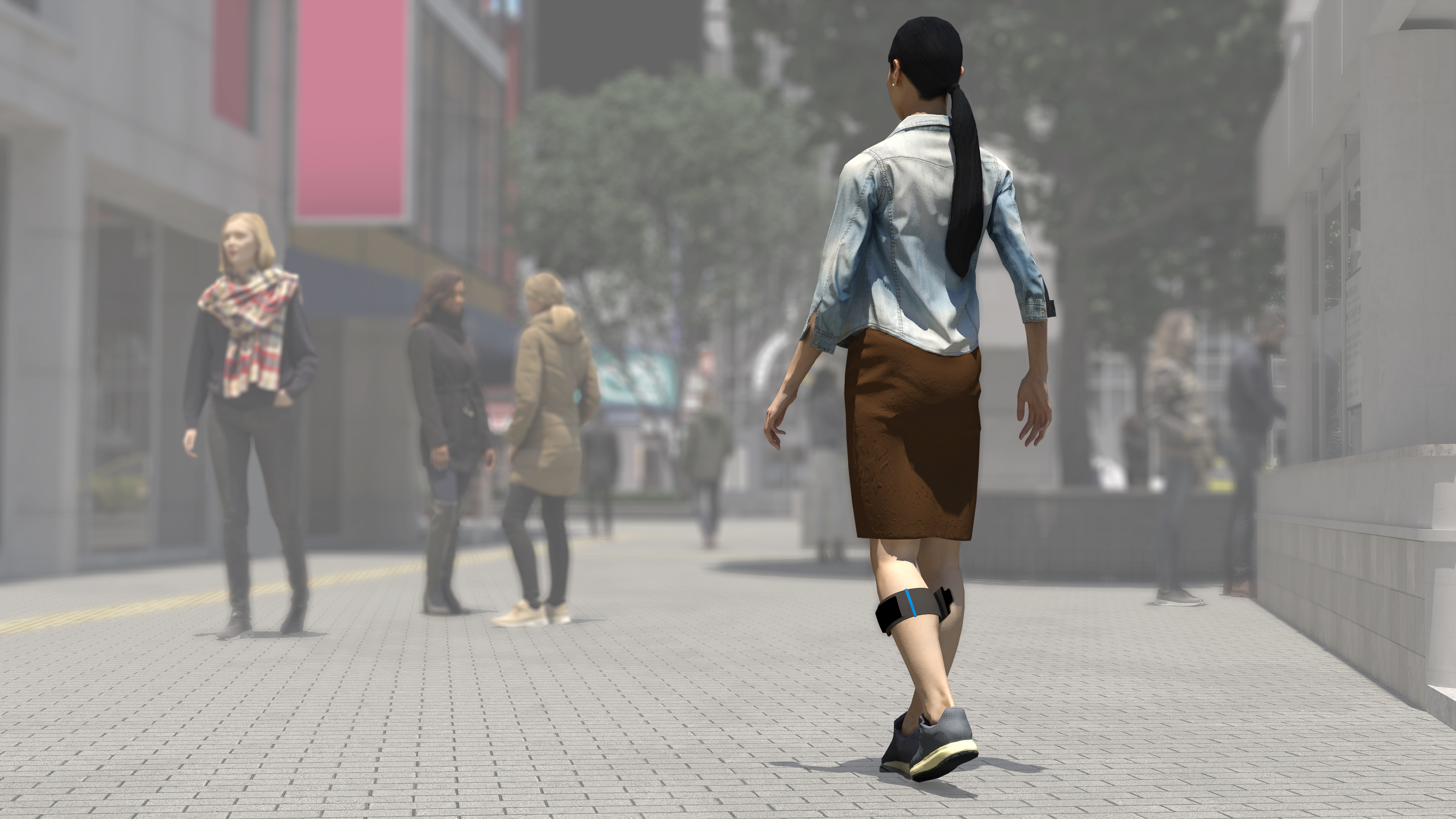
Evolution Devices’ EvoWalk applies sensors and AI to muscle electrostimulation to help people walk. Image designed by Simon Mckeown with Craig McMullen.
There are a lot more costs now that we want to prototype faster — space, equipment, staff. We’re using this grant to build out our lab setup and hardware so that we can measure every type of walking motion.
Q: What work remains to be done this year?
Neuhaus:We’re developing a new device for this competition. We’re going through the design process for additional actuation, and we’re looking at the size, weight, and location of existing actuators. We’re trying to make each one smaller, and we’re doing small customizations and keeping the scope limited.
At the same time, we’re working on the software, first in simulation, then in hardware. We’ll start with our current devices as a test bed and then build the prototype.
我们佤邦nt to ensure that a range of users can use Quix, so we’ll get multiple people of different body types, fitness levels, and ages to test it.
Mantovani:Our biggest goal is to test EvoWalk with as many people who would be end users as we can. We’re getting to the point where we can leave the device with someone to pilot it independently to prove out what we’re trying to do.
Part of the investment of this grant is to ensure that you’re making a device that’s safe. That’s really helpful for FDA testing later on.
Q: What guidance are you receiving in the Mobility Unlimited Challenge?
Neuhaus:Mentoring is available through the Human Engineering Research Laboratories [HERL] at the University of Pittsburgh. It’s offering some assistance on the technical side for engineering challenges, and on the medical side with access to physical therapists and patients.
We’re also getting assistance on the business side from MYOLYN, and an induction camp in March will enlighten us on other support from the Toyota Mobility Foundation.
Mantovani:We have a lot of scientific and business mentors ourselves. Toyota has been helpful, and HERL has offered a lot of support.
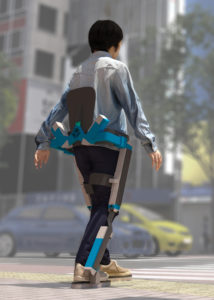
Quix is a powered exoskeleton designed to provide fast, stable, and upright mobility. Image designed by Simon Kckeown with Craig McMullen.
Q: What’s your ultimate goal, even beyond this competition?
Neuhaus:We understand the goal of the Mobility Unlimited Challenge — not just to do research but to also improve the lives of people with paralysis.
Cost is definitely an issue, even as we add more capabilities, actuators, sensors, and algorithms. There’s nothing inherent in the technology that we’re developing that means it has to be expensive; that depends on the quantity of devices made.
Insurance and society as a whole are learning the value of the independence that such devices can give someone. As people are more upright, they can have reduced medical issues from pressure sores or spasms and improved circulation, digestion, and muscle tone. Quantizing that will help justify investments in exoskeletons.
Mantovani:As this year goes by, there will be lots of opportunities for all five finalists.
Toyota has really pushed to make sure that we work with the user community. In our case, we started doing it from the beginning with my dad and other people, but it’s great that Toyota is pushing for us to interact and do co-creation more than just collaborating.
Improving mobility for people with disabilities is a tough problem, but we’re now at a good point to solve it.
Q: What would you do with the $1 million Winner’s Award for the Mobility Unlimited Challenge?
Neuhaus:We would split it between research and development and explore more for commercialization. Any device needs a significant redesign for manufacturing, since techniques for a one-off prototype don’t generally scale well to larger quantities.
There will likely be some technical challenges left for Quix, and then probably a big fundraising effort. The costs for development and commercialization have been $10 million to $20 million for the other exoskeleton companies.
Mantovani:这将是一种巨大的推动EvoWalk下体ple. We want to be ready for launch with something that’s not only a good product, but also ready to help people.
Filed Under:AI • machine learning,The Robot Report


Tell Us What You Think!